Studio as Research
The studio is both a place of making and a place of inquiry. Each work develops through an ongoing process of observation, testing, and refinement, exploring how painting, light, and time shape visual experience.
Rather than beginning with predetermined outcomes, the work evolves through experimentation with pacing, rhythm, scale, and changing visual relationships. Each adjustment becomes part of an iterative process in which making and observation continually inform one another.
Research grows directly from this studio practice, asking how temporal visual environments influence attention, perception, mood, and the experience of time.
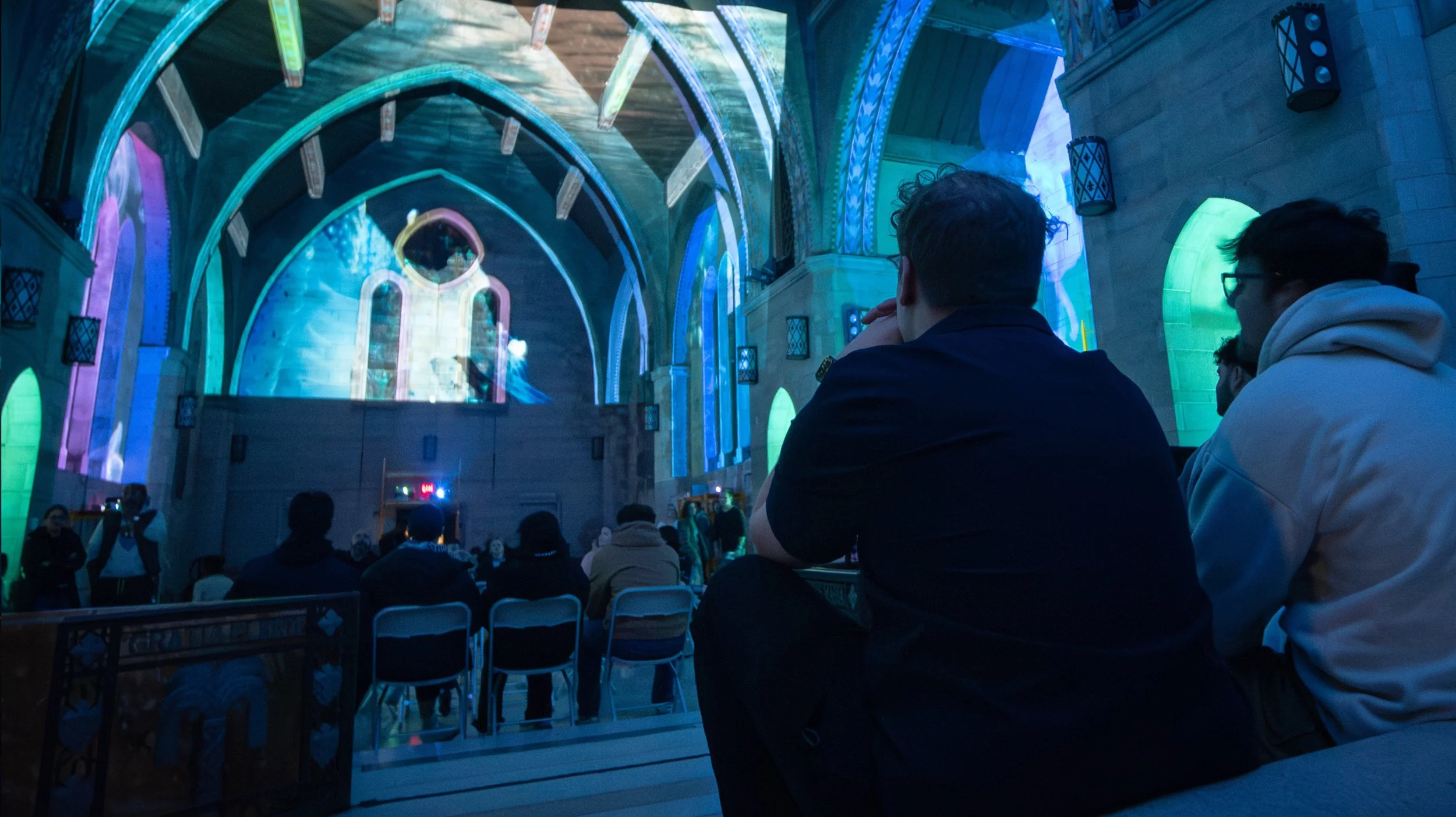
Installations and Research Studies
Installations and accompanying studies have extended this work into galleries, universities, and healthcare environments. Together they explore how sustained encounters with slowly changing visual environments influence attention, emotion, and the experience of time.
Across gallery installations, viewers frequently describe experiences of calm, wonder, expanded awareness, and a heightened sense of presence.
University studies using the Positive and Negative Affect Schedule (PANAS) found statistically significant increases in positive emotion and decreases in negative emotion following extended exposure to the work.
Clinical and Public Contexts
Recent installations have brought the work into clinical and public environments, including healthcare waiting areas and other spaces where people spend extended periods of time.
These settings provide opportunities to observe how the work functions under everyday conditions, where attention, uncertainty, and the perception of time already play important roles.
Observations from these installations continue to inform the evolution of the evolution while generating new questions for interdisciplinary research into perception, well-being, and environmental experience.
Connection to Broader Research
Research in neuroscience, perception, physiology, and aesthetics increasingly suggests that the brain and body respond to rhythm, variation, and changing sensory environments across time. These studies provide a broader context for questions that first emerged through studio practice.
Rather than illustrating scientific ideas, the work investigates similar questions through painting, projected light, and time. Slow visual change, layered rhythms, and shifting relationships create conditions in which perception remains active without demanding resolution.
Research on awe, attention, and contemplative experience further suggests that environments encouraging sustained engagement may alter how people experience themselves, space, and time. The work does not seek predetermined emotional responses, but instead creates conditions in which reflection, presence, and expanded awareness may emerge.